
It started at a dinner party.
My friend was telling a story, and I was half-listening — mentally calculating whether the dressing on my salad had the right ratio of something I'd read about that morning. She paused mid-sentence. "You're doing it again," she said. "The food thing."
I laughed it off. But driving home, I couldn't shake the feeling that somewhere along the way, eating had become homework.
The fridge standoff
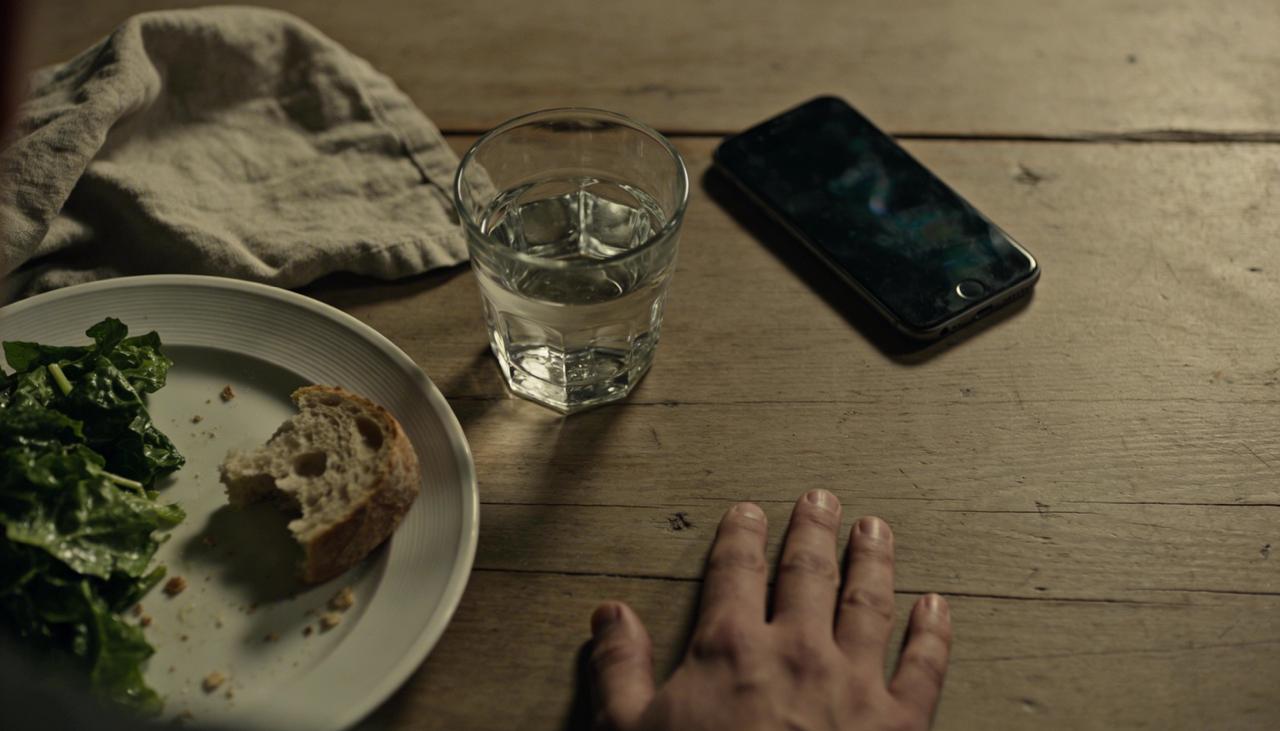
That familiar pause before eating — when food stops being simple.
The next morning I stood in front of my open fridge and couldn't decide what to eat.
It wasn't empty. There was spinach (but had it been in there too long?), eggs (but I'd read conflicting things about eggs that week), a jar of something green I'd bought at a health store and used once. I closed the fridge and made tea instead.
This had been building for months. I'd started with good intentions — just trying to eat better. But every article I read narrowed the list. One week dairy was out. Then gluten felt suspicious. Then I was comparing milligrams on supplement labels like I was solving a math problem, convinced the brand with the highest numbers was the obvious winner.
The list of things I trusted kept shrinking. The mental noise kept growing.
What it was costing me
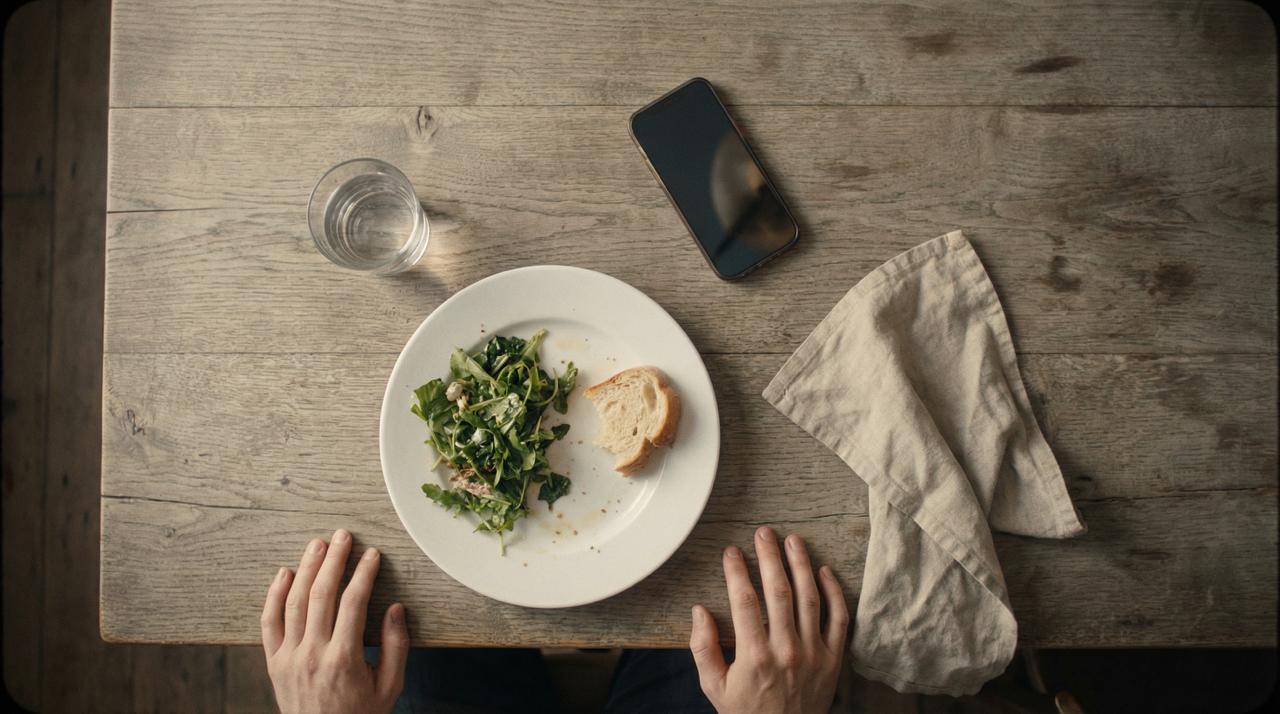
The meals got simpler, but the mental load got heavier.
I stopped suggesting restaurants with friends. Too many variables. I'd packed my own food for a weekend trip and felt ridiculous about it. At work lunches I'd pick at whatever seemed "safe" and hope nobody noticed.
The worst part? I couldn't explain what I was actually worried about. It was just... a hum. A low-level anxiety around food that never fully turned off.
I'd tried the systems. The tracking apps, the meal plans, the routines that promised simplicity but required a spreadsheet to maintain. I'd spent real money on supplements and powders, lined them up on my counter like a pharmacy, and dutifully taken them every morning.
None of it gave me what I actually wanted — which wasn't optimization. It was quiet. Just... not thinking about it so much.
I don't need another system. I need a foundation. Something simple enough that I can stop researching and start living.
The thing my friend mentioned
I wasn't looking for a product. I was just venting to a friend about the mental load of all this when she mentioned something offhand. We were talking about mornings — the kind of conversation where you complain about never having enough time — and she said she'd found something for days when she didn't want to think about food. A frozen sachet. Water. Done.
"It's just one less decision," she said. Not a pitch. Just a comment.
I looked it up that evening. The company was called Greespi. Flash-frozen whole food. Cellular structure preserved intact. Delivered frozen, stored in the freezer.
I was skeptical. But the word "frozen" reminded me of something I'd half-read once, so I went back to the research.
The science that changed my perspective
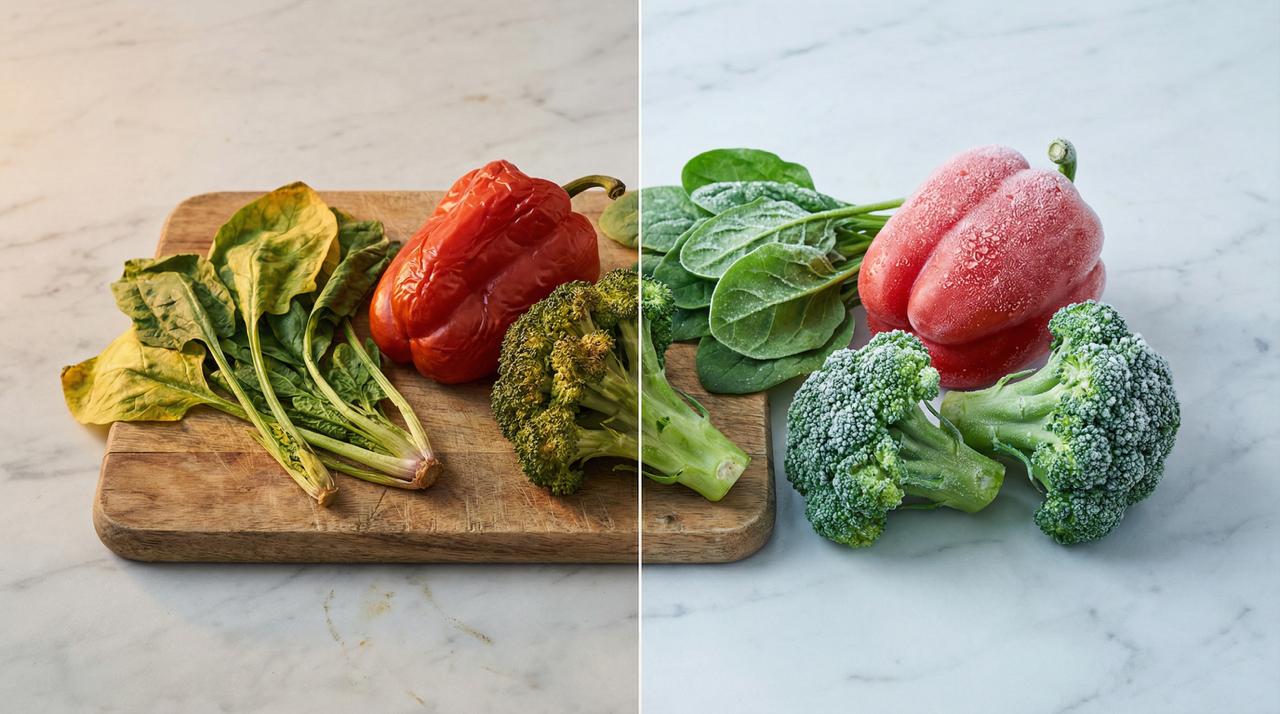
Left: three days in the fridge. Right: flash-frozen at peak freshness. Same vegetables, different outcomes.
That's when things clicked. I found a concept called bioavailability — the proportion of a nutrient your body actually absorbs and uses.
A study from the University of Western Sydney showed that spray-drying — the standard process for turning whole foods into powders — can significantly reduce antioxidant activity and damage cellular structure in the process.[1]
Then there was the food matrix effect — nutrients within their natural cellular structure are absorbed differently than isolated versions. Whole eggs resulted in significantly greater protein utilization than egg whites alone, despite identical protein content.[2]
Even more striking: lutein from whole carrots maintained the body's beta-carotene levels, while the isolated supplement actually caused beta-carotene to drop. The label said the supplement had more. The body said the whole food worked better.[3]
And here's what connected it all: researchers at UC Davis found that frozen vegetables retained more vitamins than fresh-stored ones — primarily because refrigeration doesn't stop oxidation. Flash-freezing preserves antioxidant properties and redox potential, but only when storage is airtight. Without hermetic packaging, oxidation continues even in a frozen state — destroying the very antioxidants that freezing was meant to protect.[4]
Structure matters. Format matters. The numbers on the label weren't telling me the full story.
That's exactly what Greespi's flash-freezing process was doing — preserving the whole food, the cellular structure, the antioxidant properties. Flash-frozen and sealed in airtight sachets — protecting against the oxidation that destroys bioactivity even in conventional frozen products. Not extracted. Not dried. Not exposed. Kept whole and sealed.
The box that arrived frozen
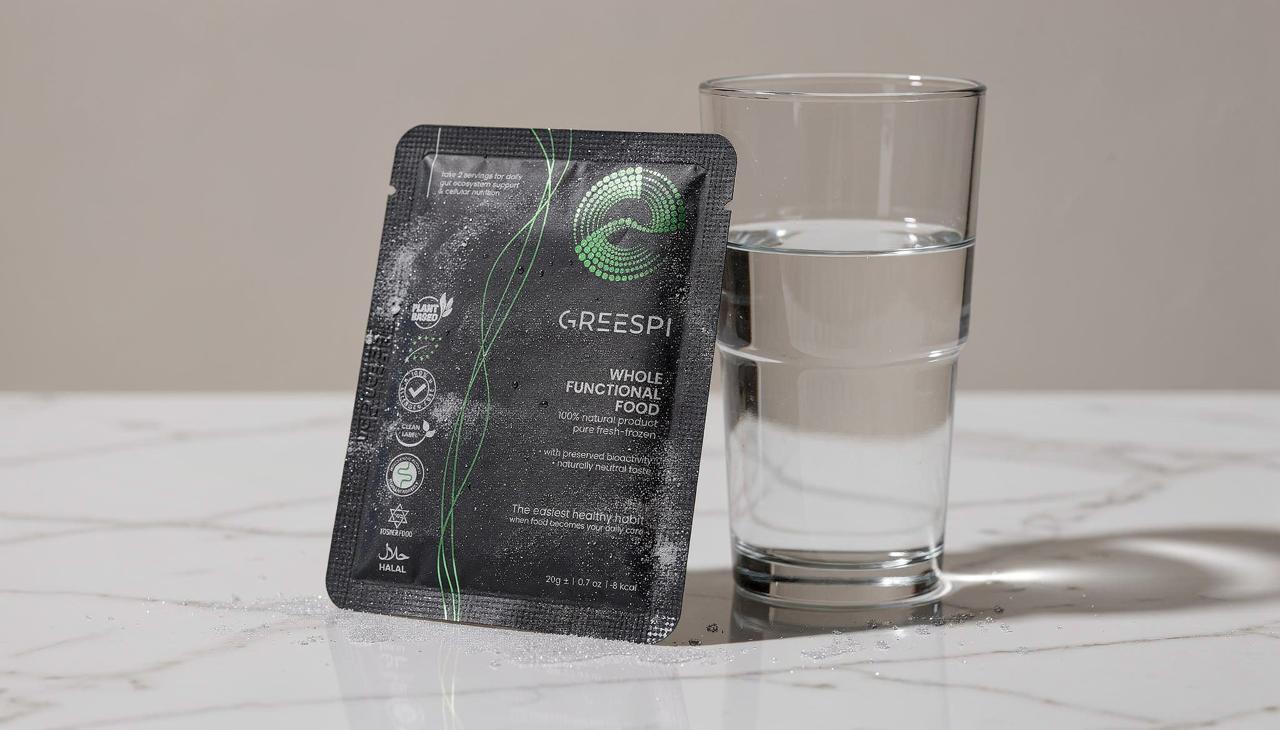
One sachet. Water. About a minute. That's the entire routine.
The box arrived frozen. Thermobox, frozen packs, frozen sachets inside. Real food — I could tell by the weight, the frost, the fact that it needed my freezer. Every batch independently audited by SGS — after months of reading labels that told me very little, seeing actual third-party lab results felt different.
The ritual was almost absurdly simple. Sachet from the freezer. Water. Stir. Done.
The hum got quieter
I didn't expect to notice anything. But after a while, I caught myself at a restaurant — ordering without rehearsing. Not scanning the menu for "safe" options. Just... picking something that sounded good.
The hum was quieter.
Then I traveled for work and didn't bring any.
It wasn't dramatic. But I noticed. The small chaos of figuring out breakfast in a hotel. That familiar low-level uncertainty creeping back in. The mental noise I thought I'd outgrown, returning like an old habit.
When I got home, I went straight back to the routine. Not because someone told me to. Because the quiet was worth protecting.
Some habits stick not because they're exciting, but because the friction is so low that stopping feels harder than continuing.
What actually changed
Last month a friend suggested a new restaurant — one of those places with a twelve-page menu and no calorie counts. Old me would have suggested somewhere "easier." Instead I just said yes.
I ordered something I hadn't eaten in months. It was fine. More than fine.
Somewhere along the way I'd stopped treating food like an exam. What changed wasn't my knowledge — I still find the bioavailability research fascinating. What changed was that I had a foundation. One simple thing I could count on, which freed up the mental space I'd been spending on everything else.
This wasn't about controlling my nutrition. It was about getting my life back from the noise.
Where I landed
Greespi — frozen whole food, preserved at peak freshness.
Flash-frozen cellular structure. Every batch independently tested by SGS. One sachet, water, about a minute. See how it works →
If any of this sounds familiar — the noise, the labels, the mental load — here's where I landed.
- Lohachoompol, V. et al. (2011). Spray-drying and antioxidant activity of blueberry extract. J Food Sci. PubMed 21806608
- van Vliet, S. et al. (2015). Whole eggs vs egg whites — protein synthesis and food matrix. Am J Clin Nutr. Summary
- Molldrem, K.L. et al. (2004). Lutein and beta-carotene bioavailability from whole carrots vs supplements. Am J Clin Nutr. PubMed 15213039
- Li, L. et al. (2017). Nutrient analyses of fresh, fresh-stored, and frozen fruits and vegetables. J Food Comp Anal, 59. PDF
- Melse-Boonstra, A. et al. (2020). Food folate bioavailability. Advances in Nutrition. PMC 7393990