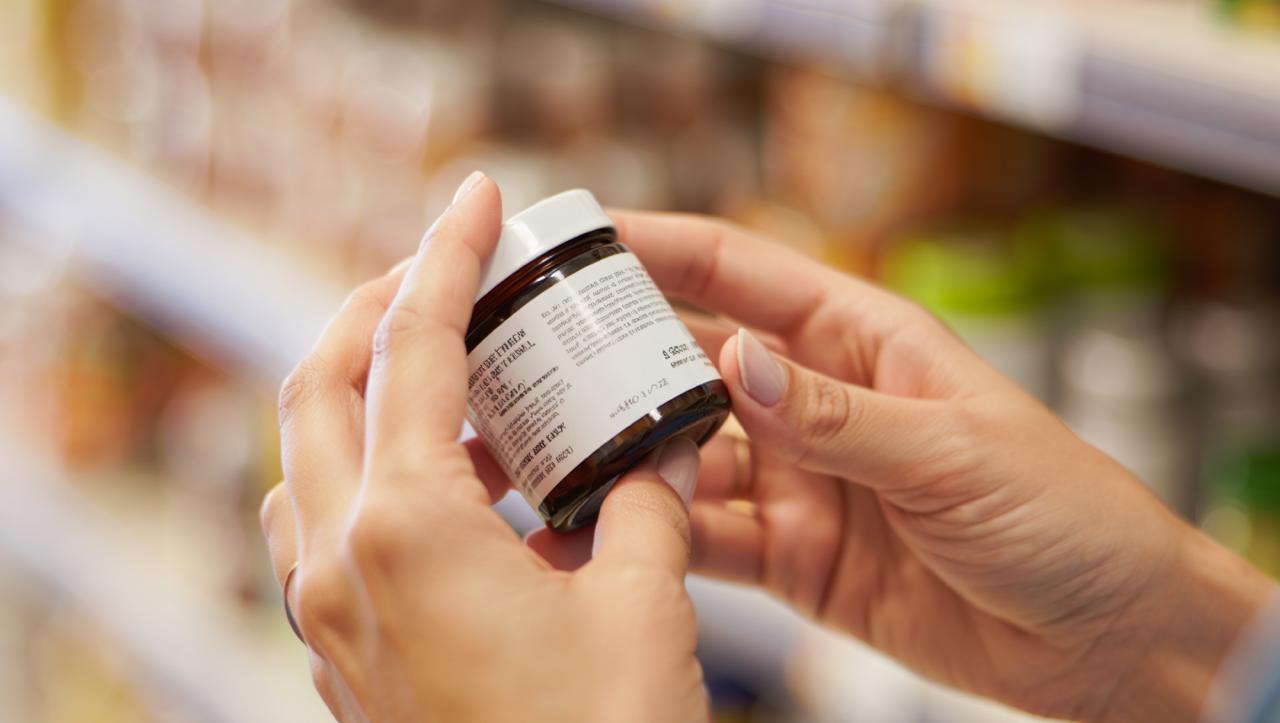
It started with a greens powder. I was standing in a health food store, holding a canister that said "lab-tested for purity" on the front label. It seemed reassuring. But something nagged at me — tested by whom? For what, exactly? And where could I see the results?
I flipped the canister around. Nothing. I scanned the QR code on the side. It led to a marketing page. I searched the brand's website. No test results. No documentation. Just the claim — "lab-tested" — sitting there like a locked door with no key.
That moment sent me down a months-long rabbit hole into the world of food and supplement testing. What I found surprised me — and changed the way I read every label.
The difference between "tested" and "verified"
Here's the first thing I learned: there is no legal standard for what "lab-tested" means on a food or supplement label. A company can test its own product in its own facility, check for one thing, pass its own criteria, and slap "lab-tested" on the package. That's not fraud. It's just vague enough to be technically true.
The word most consumers think they're reading is "verified." But verification implies something very different — an independent party, with no financial relationship to the brand, running standardized tests and issuing results. That's third-party testing. And it's shockingly rare in the food industry.
"Tested" can mean anything — self-tested, partially tested, tested once three years ago. "Third-party verified" means an independent laboratory with no stake in the outcome ran the analysis. The difference matters more than most consumers realize.
In pharmaceuticals, independent testing isn't optional. Every batch of medication is tested by accredited labs before it reaches a patient. The results are documented, traceable, and available for regulatory review. It's a system built on proof, not promises.
In the food and supplement industry? The system runs largely on trust. And I wanted to know how much of that trust was warranted.
What third-party testing actually looks like
I started calling labs. I spoke with analysts at organizations like SGS — one of the world's oldest and largest inspection and certification companies, operating in over 140 countries. I spoke with people who work with NSF International, which certifies everything from water filters to dietary supplements. I talked to smaller independent laboratories that specialize in food safety.
The process, when done properly, is rigorous. A brand sends product samples — often from multiple batches — to an independent lab. The lab tests for specific parameters: contaminant levels, nutrient content, microbial safety, heavy metals, pesticide residues. The lab then issues a Certificate of Analysis — a COA — which documents exactly what was found.
A Certificate of Analysis is a document issued by a laboratory that shows the actual results of testing on a specific batch of product. It includes what was tested, the methods used, the results, and whether those results fall within acceptable limits. Think of it as a report card — but for food.
A COA is specific. It's tied to a batch. It has numbers on it. And most importantly — it's something a consumer can ask to see.
That last part is what stuck with me. Because when I started asking brands to see their COAs, the responses were revealing.
I asked 20 brands for their test results
I picked 20 food and supplement brands — a mix of greens powders, protein supplements, frozen foods, and packaged snack brands. All of them used some variation of "tested," "quality-assured," or "lab-verified" in their marketing. I sent each one a simple email:
"Hi — I'm a consumer interested in your product. Can you share the Certificate of Analysis or third-party lab results for your most recent batch?"
Of the 20 brands, three responded with actual documentation. Three. Two sent me links to general quality pages with no specific test data. Four replied with vague assurances — "we test every batch internally" or "our facilities meet FDA guidelines." Six never responded at all. And five told me, in various polite ways, that their test results were proprietary.
Proprietary test results. Let that sink in. The proof that a product contains what it says it contains — and nothing harmful — is treated as a trade secret.
The "proprietary blend" problem
This secrecy isn't limited to test results. It extends to what's actually inside the product. If you've ever looked at a supplement label and seen the words "proprietary blend" followed by a list of ingredients but no individual amounts, you've encountered the same pattern.
A proprietary blend lets a manufacturer list ingredients without disclosing how much of each is included. So a greens powder might list a dozen trending ingredients on the label — but the blend could be 90% the cheapest filler and 1% of the ingredient that's actually on the front of the label. You'd never know.
Without specific quantities and independent verification, there's no way for a consumer to confirm that what's listed on the label matches what's in the product. "Proprietary blend" is legal. But it's also a black box — and black boxes don't build trust.
In the pharmaceutical world, this would be unthinkable. Imagine a prescription medication that said "proprietary blend of active ingredients" without specifying the dose. No doctor would prescribe it. No pharmacist would fill it. Yet in the food and supplement aisle, it's standard practice.
Why most brands don't test (and why some do)
I wanted to understand the economics. Third-party testing isn't free. A full panel COA from a reputable lab can cost hundreds to thousands of dollars per batch, depending on what's being tested. For a small brand running on thin margins, that's a real cost.
But here's what the lab analysts told me: the cost isn't the main barrier. Many brands could afford it. The real barrier is that nobody's making them do it. For most food products and supplements, third-party testing is voluntary. The FDA requires that products are safe and properly labeled, but it doesn't mandate independent verification. Enforcement is reactive — the agency typically steps in after something goes wrong, not before.
So brands that do invest in third-party testing are making a choice. They're spending money they're not required to spend, submitting to scrutiny they could legally avoid. And the ones that publish their COAs publicly are going even further — they're saying, "Here are the receipts. Check our work."
That signal matters. Not because a COA guarantees perfection, but because transparency is a pattern. Brands that test independently tend to be the same brands that list specific ingredient quantities, disclose their sourcing, and invite questions rather than deflecting them.
The one question every consumer should ask
After weeks of research, dozens of emails, and conversations with lab analysts and food scientists, I keep coming back to one thing. There's a single question that cuts through all the marketing noise, all the label claims, all the beautiful packaging:
"Can I see the test results?"
That's it. Five words. And the response tells you nearly everything you need to know.
A brand that hands you a Certificate of Analysis — batch-specific, from an independent lab, with real numbers — is a brand that has nothing to hide. A brand that deflects, delays, or tells you the results are "proprietary" is asking you to trust without evidence.
I'm not saying every product without a public COA is bad. Some brands test rigorously and simply haven't built the infrastructure to share results publicly. But the willingness to show proof — or the reluctance to do so — is a meaningful signal about how a company thinks about its relationship with the people buying its products.
Green flags: Independent lab name on the COA (SGS, NSF, Eurofins, etc.). Batch-specific results. Specific quantities per ingredient. A willingness to share documentation when asked.
Red flags: "Lab-tested" with no documentation available. "Proprietary blend" without individual quantities. Test results described as confidential. No response to reasonable consumer inquiries.
Transparency isn't a feature — it's a standard
We've somehow accepted a world where proof of quality is optional in the food industry. Where brands can say "tested" without showing the test. Where ingredients can be hidden behind the word "proprietary." Where asking to see documentation is treated as an unusual request rather than a basic consumer right.
That doesn't have to be the norm. Every time a consumer asks "can I see the test results?" — and takes the answer seriously — the market shifts a little. Demand for transparency creates transparency. And the brands that are already doing the work deserve to be recognized for it, while the ones relying on vague claims deserve to be questioned.
The receipts exist. You just have to ask for them.
One example that stood out during my research: a frozen whole-food company that publishes independent SGS audit results for every batch — not summaries, but actual lab certificates with specific quantities. It's rare to see that level of openness. If you want to see what genuine transparency looks like in practice, their quality page is a good reference point.
— Mark P., investigative journalist & consumer advocate